Wondering whether a multi-unit property in Pacific Heights is a smart buy? You are not alone. This is one of San Francisco’s most established and expensive neighborhoods, so the numbers can look promising at first glance while the real opportunity often depends on details hidden in rent rolls, tenant history, and building condition. If you are considering a duplex, triplex, or fourplex here, this guide will help you understand what really matters before you make an offer. Let’s dive in.
Pacific Heights Market Snapshot
Pacific Heights is a premium, supply-constrained neighborhood, and that shapes almost every buying decision. In Redfin’s March 2026 snapshot, the median sale price in the neighborhood was about $2.3 million, while its multi-family search page showed just 5 active multi-family listings at a median list price of $2.6 million.
That combination of high pricing and limited inventory means you are usually not shopping in a market built for easy deals or quick wins. In Pacific Heights, buyers often compete for a small pool of properties, and successful purchases tend to favor a long-term hold strategy over a pure short-term cash flow play.
Why Pacific Heights Appeals to Multi-Unit Buyers
Pacific Heights offers a location profile that continues to attract renter demand. Apartments.com describes the neighborhood as exceptionally walkable with exceptional public transit, which can support leasing demand and help sustain long-term desirability.
At the same time, this is not a plug-and-play investor market filled with newer buildings. The neighborhood is known for historic buildings, older housing stock, and upscale homes along tree-lined streets, which means you should expect older systems, more maintenance, and a higher chance of retrofit-related costs.
Rent Potential Depends on the Rent Roll
Rents in Pacific Heights are strong, but headline rent averages only tell part of the story. As of May 2026, Apartments.com reported average monthly rents of $2,634 for studios, $3,635 for one-bedrooms, $4,780 for two-bedrooms, and $7,234 for three-bedrooms. RentCafe placed the neighborhood average at $3,717.
Those numbers are useful for market context, especially because Apartments.com showed Pacific Heights one-bedroom and two-bedroom averages running above citywide averages. Still, when you are buying a multi-unit building, the real question is not just what the neighborhood can command in theory. It is what this specific property can legally and practically produce.
Vacant Units Change the Math
Under San Francisco’s rent rules, there is no limit on the first rent charged when a vacant covered unit is leased. After that, ongoing annual increases are capped, and for the period from March 1, 2026 through February 28, 2027, the citywide allowable annual increase is 1.6%.
That means a vacant unit can offer meaningful income flexibility at the start of ownership. By contrast, an occupied building with long-term tenants may provide stable income, but the path to higher rents is usually slower and more procedural.
In-Place Rents Matter More Than Projections
If you are underwriting a duplex, triplex, or fourplex, you need to focus on the actual rent roll, lease terms, and timing of allowable increases. In San Francisco, upside often comes from vacancy events, turnover, and properly timed legal rent increases rather than from large immediate rent jumps.
A building with below-market legacy rents can still be appealing. But in Pacific Heights, the value-add path usually depends on patience, precise timing, and compliance with city rules, not on aggressive assumptions.
Tenant Status Should Be Your First Question
One of the most important diligence questions is whether the building is vacant, partially occupied, or fully occupied. Many San Francisco units built on or before June 13, 1979 have both rent control and eviction protections under the Rent Ordinance, while newer or exempt units may be treated differently.
This matters because legal flexibility can change dramatically once tenants are in place. A property that looks attractive on a price-per-unit basis may have very different investment potential depending on tenant occupancy and the building’s regulatory status.
Long-Term Tenants Can Be a Strength and a Constraint
Long-term tenants can provide reliable occupancy and stable income. They can also limit your near-term ability to reposition the property or materially increase income.
San Francisco allows banked rent increases, but timing is important. If a scheduled increase is missed or an anniversary date is changed, some increase capacity can be lost, so lease audits, rent ledger reviews, and anniversary-date tracking should be part of your diligence from day one.
Turnover Planning Requires Caution
If your business plan depends on future turnover or occupancy changes, you need to understand how formal and expensive that process can be in San Francisco. The city notes that most residential tenants have eviction protections, and some scenarios such as owner move-in, demolition or permanent removal, temporary capital improvement, substantial rehabilitation, and Ellis Act situations can involve relocation obligations and additional procedures.
In practical terms, you should avoid underwriting a building based on assumptions that tenants will leave easily or quickly. Conservative planning tends to produce better outcomes in a neighborhood like Pacific Heights.
Do Not Rely on Short-Term Rental Income
Some buyers are tempted to fill income gaps with short-term rental assumptions. In San Francisco, that approach is usually not reliable for a multi-unit investment property.
The city’s current short-term rental rules require host eligibility and registration, limit un-hosted rentals to 90 nights per year, and in a multi-unit building the host may only register the unit where they live. For most investors buying a small apartment building, that makes Airbnb-style income an unstable underwriting strategy.
Building Condition Can Change the Deal
In Pacific Heights, the building itself can be just as important as the location. Because the neighborhood has many older properties, physical-condition diligence should be central to your review.
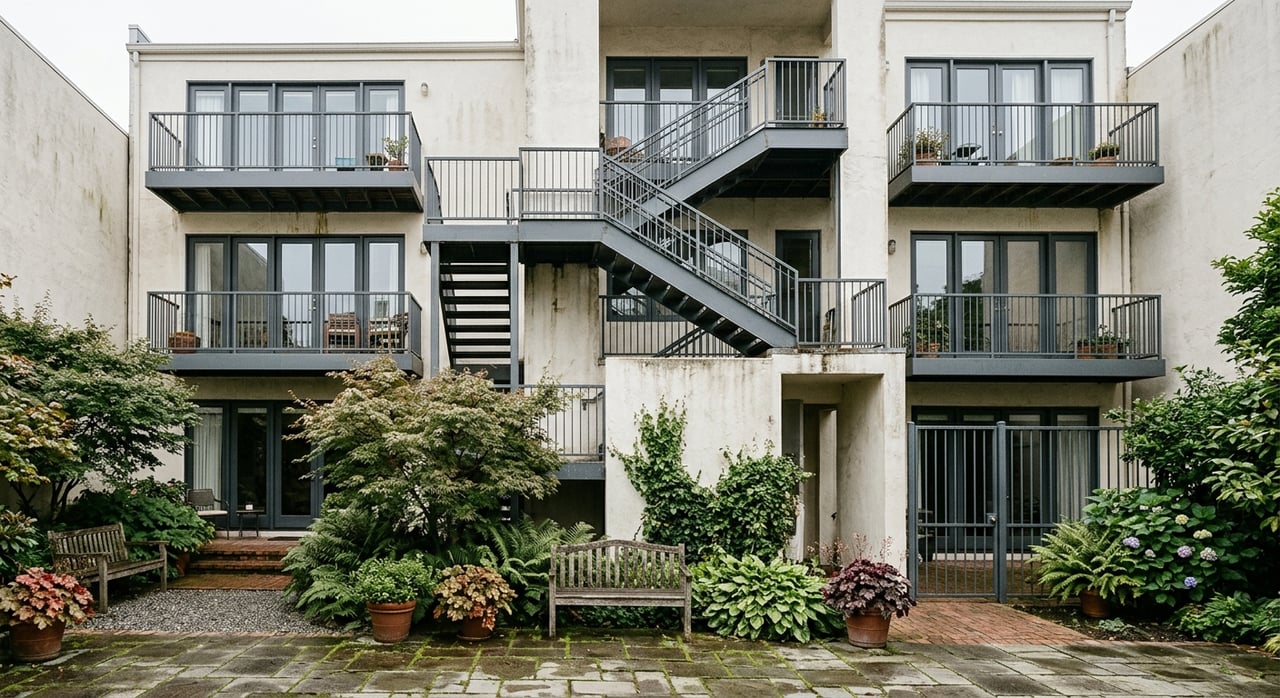
San Francisco requires some wood-frame multi-family buildings to complete mandatory soft-story seismic upgrades. The city also requires apartment buildings and condominiums with three or more dwelling units to have exterior structural attachments inspected every five years.
Key Items to Review
Before you move forward, your diligence checklist should include:
- Soft-story status
- Foundation and seismic history
- Deck, balcony, stair, and other exterior attachment condition
- Roof condition
- Plumbing systems
- Electrical systems
- Heating systems
- Renovation scope and permit triggers
In a premium neighborhood with older housing stock, deferred maintenance can materially affect your return. A property with strong rent potential may still become a weaker investment if structural or systems work is more extensive than expected.
Renovation Costs May Be Higher Than You Think
Renovation planning in San Francisco requires care, especially if your strategy involves more than cosmetic improvements. The city has announced that beginning July 1, 2026, some major renovation projects will need to be fully electric if they meet specific trigger conditions.
That can affect budgeting in a major way. Electrical capacity, fuel switching, permitting, and code compliance can all increase the real cost of a project that initially looks like a straightforward update.
Financing Is Usually More Conservative
Financing for a 2- to 4-unit investment property is usually tighter than financing for a single-family owner-occupied home. Freddie Mac’s conforming guidance caps 2- to 4-unit investment-property purchase loans at 75% loan-to-value.
That means you should generally expect a larger equity requirement, stronger reserve expectations, and more underwriting scrutiny around in-place leases and rental income. Lenders also tend to take a cautious view of projected upside, which reinforces the importance of buying a property that works under conservative assumptions.
What a Strong Pacific Heights Buy Looks Like
In many cases, the most compelling Pacific Heights multi-unit purchase is not the property with the most dramatic value-add story. It is the one where the building condition, tenant profile, legal rent framework, and financing all line up in a way that still works if rent growth stays modest and turnover takes time.
A strong acquisition often has these traits:
- A high-quality location within a supply-constrained neighborhood
- Clear understanding of rent-control status
- Realistic in-place income analysis
- Conservative assumptions around vacancy and rent growth
- Manageable deferred maintenance and retrofit exposure
- Sufficient liquidity for both closing and post-closing capital needs
For many buyers, Pacific Heights is best approached as a durability and capital preservation play with selective upside, not as an immediate high-cash-flow investment.
How to Underwrite More Carefully
If you are serious about buying a multi-unit property in Pacific Heights, your underwriting should go deeper than the listing package. You will want to verify how each unit is occupied, what rent increase rights may exist, what maintenance or retrofit obligations may be coming, and whether the financing still holds up under a more conservative income scenario.
This is where analytical clarity matters. In a neighborhood with premium pricing and limited inventory, disciplined diligence can help you avoid overpaying for upside that may be harder, slower, or more expensive to realize than it first appears.
If you want a clear-eyed view of a Pacific Heights multi-unit opportunity, Matt Ciganek offers bespoke guidance grounded in San Francisco market knowledge, investor-minded analysis, and thoughtful transaction support.
FAQs
What makes Pacific Heights different for multi-unit buyers?
- Pacific Heights combines high pricing, limited inventory, strong renter demand, and older building stock, so buyers usually need to balance location quality with careful analysis of rents, tenant status, and physical condition.
What should you check first when buying a Pacific Heights duplex, triplex, or fourplex?
- Start with occupancy status, rent-control status, in-place rents, lease terms, and the building’s physical condition, because those factors shape both legal flexibility and future income potential.
How do San Francisco rent rules affect a Pacific Heights multi-unit purchase?
- For covered vacant units, the first rent is not capped, but ongoing annual increases are limited, and the allowable citywide increase is 1.6% from March 1, 2026 through February 28, 2027.
Why is building condition so important in Pacific Heights?
- Many properties are older, which can mean higher maintenance, possible seismic retrofit obligations, and required inspections for exterior structural attachments in buildings with three or more dwelling units.
Can you count on short-term rentals for income in a Pacific Heights multi-unit building?
- Usually no, because San Francisco’s short-term rental rules require registration, limit un-hosted rentals, and allow registration in a multi-unit building only for the unit where the host lives.
Is Pacific Heights a good fit for short-term cash flow investors?
- It is often a better fit for buyers with a long-term horizon, substantial liquidity, and a strategy built around durability, selective upside, and conservative rent assumptions.